
Understanding Feline Infectious Peritonitis
Updated: May 12

What is FIP?
Feline Infectious Peritonitis (FIP), also known as short-form FIP, is one of the most devastating diagnoses a cat owner may receive. Knowing the different forms of FIP, recognizing symptoms early, and understanding current treatment options can make a critical difference for a cat with FIP. Donate here
How It Develops
FIP is caused by a mutation of the feline coronavirus (FCoV), a common virus in felines. There are many strains of feline coronavirus, most of which are found in the gastrointestinal tract, and they do not cause significant issues. Feline enteric coronavirus (FeCV) strains can mutate into more virulent strains that cause FIP.

How do Cats get FIP?
FeCV mainly passes between cats through their environment and close contact. Common ways it spreads include:
From mother cat to kittens: it is possible for the mother cat to spread FIP through her placenta to her unborn kittens.
Fecal-oral route (most common): the virus is mainly spread through cat feces, especially when cats share the same litter box.
Saliva: FIP can spread through food bowls and when cats groom each other.
Sneezing (less common)
Types of FIP
FIP can manifest in three different forms: Effusive (Wet), Non-Effusive (Dry), and Mixed.
Effusive (Wet) Form


Wet FIP is characterized by fluid buildup in the abdomen or chest.
This fluid accumulation can cause:
Visible abdominal swelling (often mistaken for weight gain or pregnancy)
Breathing difficulties if fluid accumulates around the lungs
Rapid decline, as wet FIP often progresses quickly
Wet FIP is often easier to recognize than other forms as the symptoms can become dramatic in a short period of time.
Non-Effusive (Dry)

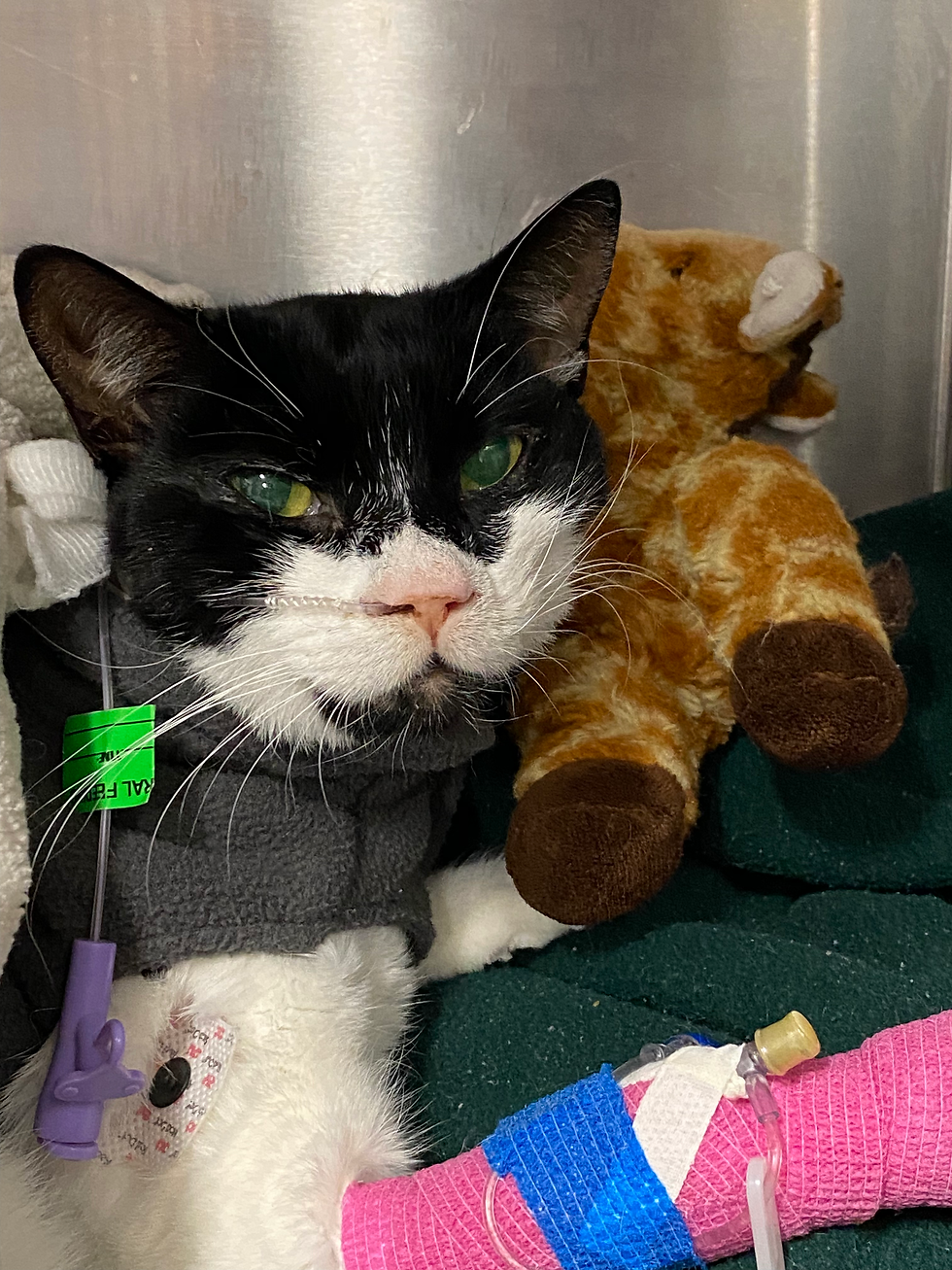
Nova - 9 mo, F
Dry FIP involves little to no fluid buildup, however, causes inflammation throughout the body instead.
Causes inflammation in organs such as:
Eyes
Brain and nervous system
Liver and kidneys
Symptoms may develop more slowly, but can be complex and harder to diagnose.
Mixed

Nova has dry FIP and weighs approximately 4 pounds
Mixed FIP is a combination of both wet and dry forms
Cats with mixed FIP may show symptoms of:
Fluid accumulation
Organ inflammation
Neurological/eye-related symptoms
These forms are influenced by the immune response stronger cellular immunity may lead to dry FIP, while weaker responses often result in the wet form
Symptoms to Watch For
FIP symptoms can be difficult to notice at first, and it often induces symptoms similar to other illnesses. Common signs include:
Persistent fever that does not respond to antibiotics
Lethargy and decreased appetite
Weight loss
Abdominal swelling (wet form)
Difficulty breathing (if chest fluid is present)
Jaundice (yellowing of skin/eyes)
Eye changes (cloudiness, colour changes)
Neurological signs (wobbling, seizures, behaviour changes)
Because symptoms vary widely, diagnosis can be challenging and often requires multiple tests.
Is It Contagious?
FIP itself is not considered directly contagious. However:
The underlying coronavirus (FCoV) is contagious between cats and typically spreads through feces (litter boxes, shared spaces).
Many cats carry FCoV without ever developing FIP
Only a small percentage (estimated around 1–5% in high-density environments) go on to develop FIP
This is why good hygiene and reducing stress in multi-cat environments are critical!
Is Your Cat Vulnerable to FIP?
Any cat that carries FeCV is at a potential risk of developing FIP. Other factors include:
Young age (commonly during first few weeks after birth)
Cats that live in multi-cat households, shelters, or catteries
Stress
Genetic factors
Male cats are affected more often than females
Treatment & Prognosis
Historically, FIP was considered fatal. Once the disease develops, without treatment, most felines deteriorate rapidly. However, recent advances have dramatically changed the outlook.
Without Treatment
Untreated FIP is generally considered progressive and often fatal. The speed of progression varies depending on the form of FIP:
Wet (effusive) FIP often progresses rapidly, sometimes over days to weeks
Dry (non-effusive) FIP progresses slower than wet FIP, but can still become severe
With Treatment
Prognosis for cats receiving antiviral treatment has improved dramatically. Two treatment options that have shown high success rates in treating FIP well are: Remdesivir and GS-44152; however, they are not yet widely available.
Supportive care can extend longevity and improve quality of life for cats with FIP:
Thoracentesis to drain fluid from the chest
Abdominocentesis to drain fluid from the abdomen
Anti-inflammatory drugs such as corticosteroids
Immunosuppressants
Fluid therapy
Nutritional support (such as feeding tube)
While access and regulation of treatments may vary by region, there is now real hope for recovery, which is a major shift from the past.
GS-441524 Dosage Guidelines for Cats with FIP
Dosage Guideline for Injection
FIP Type | Starting Dose |
Wet (effusive) FIP with no ocular/neurological disease signs | 4-5mg/kg daily for 12 weeks |
Dry (non-effusive) FIP with no ocular/neurological disease signs | 5-6mg/kg daily for 12 weeks |
Ocular lesions and no neurological signs | 8mg/kg daily for 12 weeks |
With neurological signs | 10mg/kg daily for 12 weeks |
Wet/Dry FIP developing ocular/neurological signs | Appropriate ocular/neurological dosage |
Do not inject dosage above 10mg/kg daily. Dosage is to be adjusted with weekly weight checks as weight can fluctuate.
Impact on Treatment Costs:
The cost of GS-441524 treatment will vary through several key factors such as:
Limited suppliers
Dosage based on weight and severity
Different vial concentrations
Duration of treatment
The typical cost for a 20mg/ml vial is ~$110 - $160 CAD.
Why This Matters for Rescues
FIP thrives in stressful environments— understanding FIP is critical for cat rescues like Finally Home Cat Rescue because it allows for early prevention and knowing the treatment options beforehand.
Sources:
Gao, Y. Y., Wang, Q., Liang, X. Y., Zhang, S., Bao, D., Zhao, H., ... & Gao, F. S. (2023). An updated review of feline coronavirus: Mind the two biotypes. Virus research, 326, https://doi.org/10.1016/j.virusres.2023.199059
Chi, X., Deng, X. (2025). Feline Coronaviruses. In: Wang, L. (eds) Veterinary Virology of Domestic and Pet Animals. Springer, Cham. https://doi.org/10.1007/978-3-031-54690-7_123-1
https://vcacanada.com/know-your-pet/feline-infectious-peritonitis
https://www.petmd.com/cat/conditions/infectious-parasitic/feline-infectious-peritonitis
https://vet.ucalgary.ca/sites/default/files/teams/1/Podcasts/CuttingEdge/S2/S02E04.pdf


